Skip to content

LED profile lighting is a modern architectural solution that integrates linear LED strips into ceilings, walls, and recessed channels to create seamless illumination. When installed correctly, it enhances depth, highlights structure, and improves overall lighting performance in residential and commercial spaces.
Why LED Profile Lighting Works in Modern Ceiling Design
Design Versatility: Unleashing Creativity
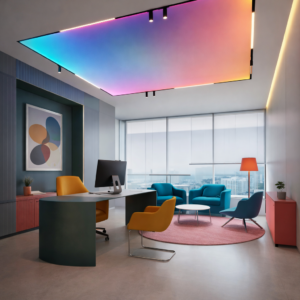
LED profile lighting has become popular in modern ceiling design because it allows light to be integrated directly into architectural lines. Instead of relying on visible fixtures, linear LED profiles can be recessed into ceiling channels, perimeter drops, or stretch ceiling systems to create clean, continuous illumination. This approach enhances depth, highlights structure, and produces effects such as floating ceilings or soft perimeter glow without visual clutter.
As we move forward, the innovative applications of LED profile lights in interior design continue to expand. The next chapter will explore creative ways to incorporate these versatile lighting solutions into ceiling designs, showcasing how they can transform spaces from ordinary to extraordinary.
LED Profile Lights in Real Stretch Ceiling Projects
LED profile lights behave very differently in real ceiling installations than they do in product catalogs. When integrated into stretch ceilings, factors such as profile depth, diffuser quality, ceiling reflectivity, and heat management directly affect both performance and appearance.
At Space Ceiling, we install LED profile lighting as part of complete ceiling systems — not as standalone fixtures. In real residential and commercial projects, profiles are most effective when used to create continuous architectural light lines rather than isolated light sources.
For example, in modern kitchens and living spaces, LED profiles are often integrated along ceiling perimeters or recessed channels to create indirect ambient lighting without visible fixtures. Achieving a clean result requires careful control of glare and brightness, especially with reflective or satin stretch ceiling finishes.
Real-World Installation Examples
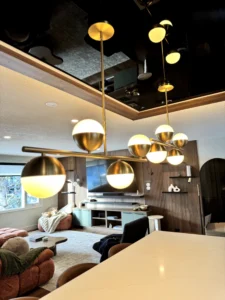
Residential kitchen remodeling in Lakeview, Calgary project
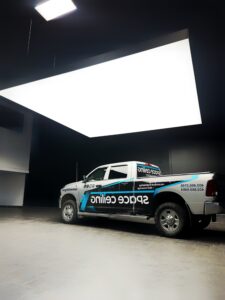
LED profiles were installed along the perimeter of a matte stretch ceiling to create indirect ambient lighting. The main challenge was preventing hotspot reflections on the ceiling surface. Profile depth and diffuser selection were adjusted to achieve a smooth, even glow. Link
Commercial workspace project Edmonton
Continuous LED profiles were integrated into linear ceiling elements to provide uniform lighting without glare. Driver access points were planned in advance to allow future maintenance without ceiling disruption. Edmonton Lexus custom light
Transforming Spaces with LED Profile Lights
LED profile lights revolutionize ceiling design, offering unparalleled versatility and creativity. These innovative lighting solutions dramatically alter the ambiance and functionality of any room.
Highlighting Architectural Features
LED profile lights excel at accentuating architectural elements. For example, cove lighting along the perimeter of a vaulted ceiling draws attention to its unique shape and creates a floating effect. This technique enhances the room’s visual appeal and makes the space feel larger and more open.
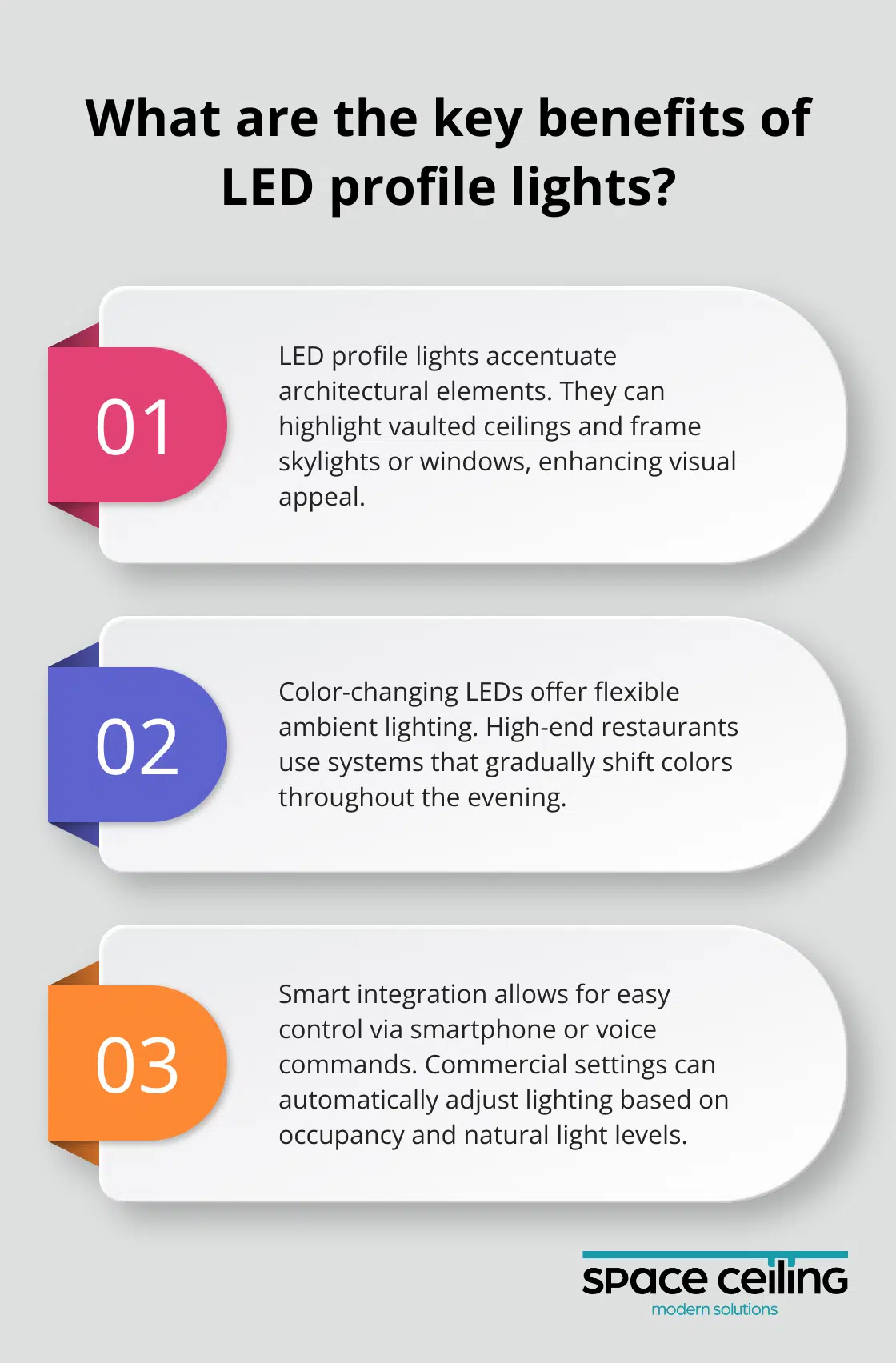
Another effective application frames skylights or windows with LED profiles. This approach enhances natural light during the day and provides a soft, ambient glow at night. In luxury penthouses, this technique results in a seamless transition between day and night lighting that homeowners adore.
Space Ceiling has gained extensive experience in light solutions over the past decade.
Check what’s availible on the lighting
Mastering LED Profile Light Installation
Planning for Precision
LED profile light installation demands careful planning. Measure your space accurately, considering corners, obstacles, and desired light placement. Many people underestimate the required lighting, resulting in inadequate illumination.
So what type of LED strip to choose?
Beam Angels
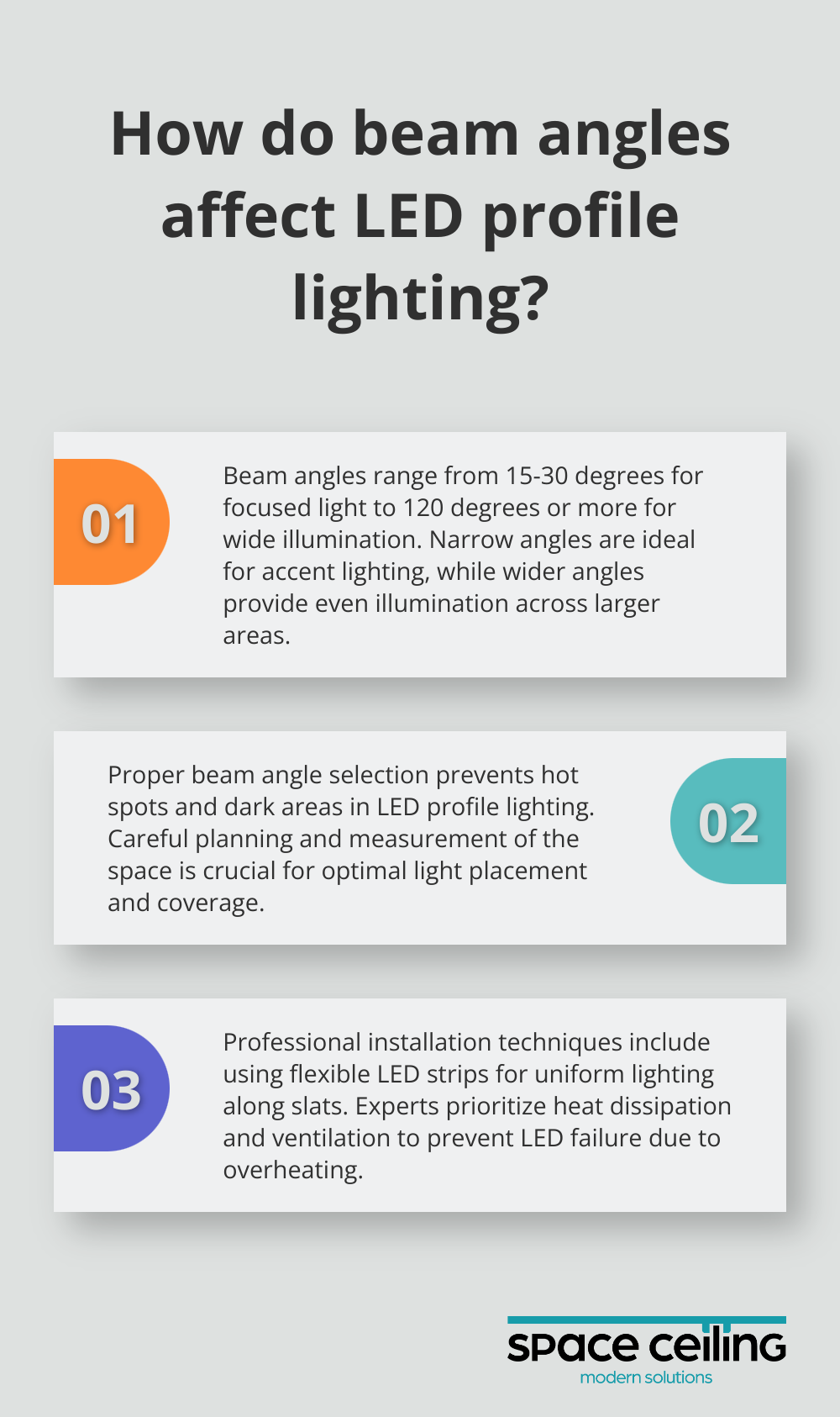
The beam angle of LED strips plays a crucial role in planning. Narrow beam angles (15-30 degrees) produce ocused light, perfect for accent lighting. Wider angles (120 degrees or more) offer even illumination across larger areas. Select the beam angle that matches your intended use to avoid hot spots or dark areas.
Final Thoughts
LED profile lights have revolutionized modern ceiling design, offering a perfect blend of aesthetics and functionality. These innovative lighting solutions provide unparalleled energy efficiency, design versatility, and precise control over illumination. The benefits of LED profile lights extend beyond mere aesthetics.
LED Track & Profile Lighting FAQs
What’s the difference between LED track lighting and LED profile lighting?
Track lighting uses a rail system where fixtures can be repositioned and aimed as needed. Profile lighting uses linear aluminum channels (profiles) to create clean, continuous light lines integrated into the ceiling design. Track systems are flexible; profile systems look more architectural and seamless.
Are LED track and profile lights suitable for stretch ceilings?
Yes, but they must be planned correctly. Profile depth, diffuser quality, heat management, and driver access are all critical. Stretch ceilings reflect and diffuse light differently than drywall, so layout and glare control matter more.
Can track or profile lighting be changed later?
Track lighting is the most flexible—you can add, remove, or reposition fixtures on the rail. Profile lighting is more built-in, so changes usually require planning around the existing channel, power supply, and access points.
How do I avoid visible LED “dots” in profile lighting?
Choose a high-quality diffuser and the correct profile depth, and use an LED strip designed for dot-free output. In ceilings—especially bright or reflective finishes—poor diffuser selection can make hotspots more noticeable.
Do LED profiles overheat inside the ceiling?
They can if installed incorrectly. Aluminum profiles help dissipate heat, but wattage, ventilation, and driver placement must be planned. Overheating can shorten LED lifespan and cause early failure.
Do track and profile lights work with dimmers and smart controls?
Yes, but compatibility depends on the driver and control system. Use LED-rated dimmers and matched drivers, and confirm whether you want dimming, tunable white, or full color control before installation.