Skip to content

The Ultimate Guide to Ceilings: Types, Benefits, and Modern Solutions
Modern ceilings include innovative solutions like stretch ceilings, suspended ceilings, and coffered ceilings, offering benefits such as fire resistance, soundproofing, and enhanced aesthetics.
Types of Ceilings
Ceilings come in various styles, each with distinct characteristics and purposes:
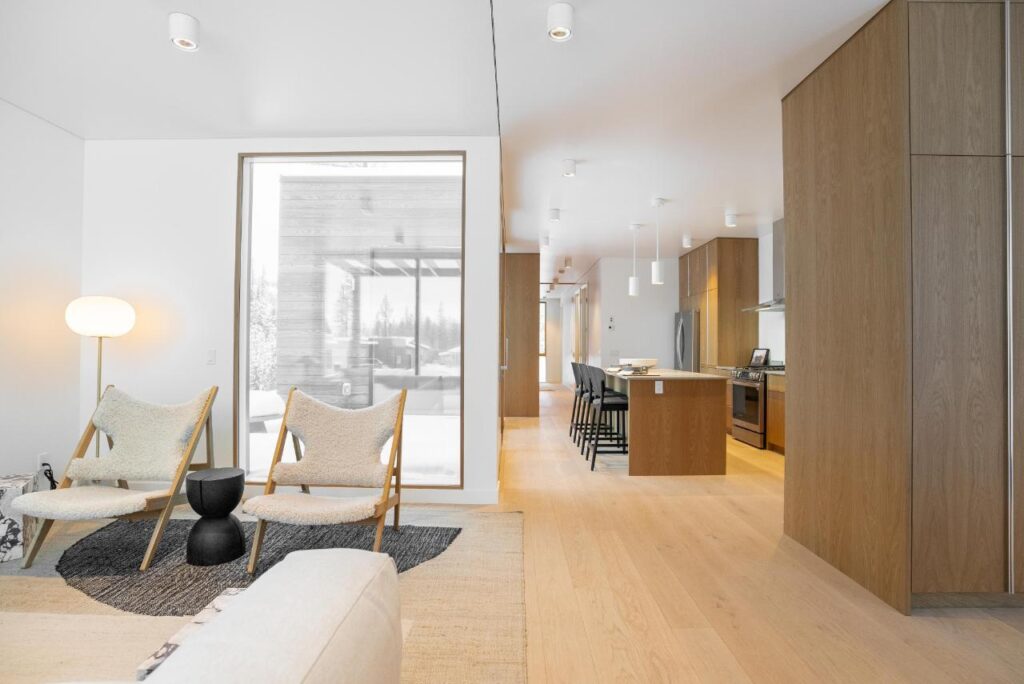
1. Stretch Ceiling
- A modern, seamless ceiling solution.
- Made from PVC or fabric, stretched across a perimeter frame.
- Benefits: Dust-free, waterproof, customizable designs.
- Best for: Luxury homes, commercial spaces, and high-end renovations.

2. Supended Ceiling (Drop Ceiling)
- Installed below the actual ceiling to hide ductwork and wiring.
- Made from lightweight panels supported by a metal framework.
- Benefits: Easy access for repairs, fire resistance, soundproofing.
- Best for: Offices, basements, commercial buildings.
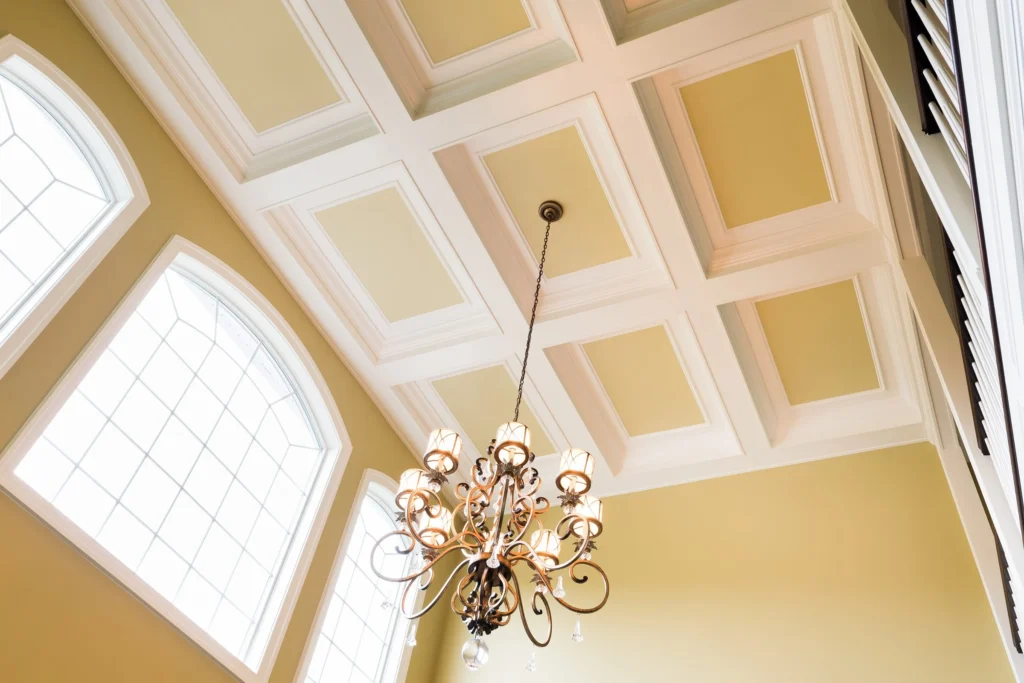
3. Coffered Ceiling
- Features a grid of recessed panels for a sophisticated look.
- Often found in classical and luxury interiors.
- Benefits: Adds depth and elegance, enhances acoustics.
- Best for: High-end homes, offices, and heritage buildings.
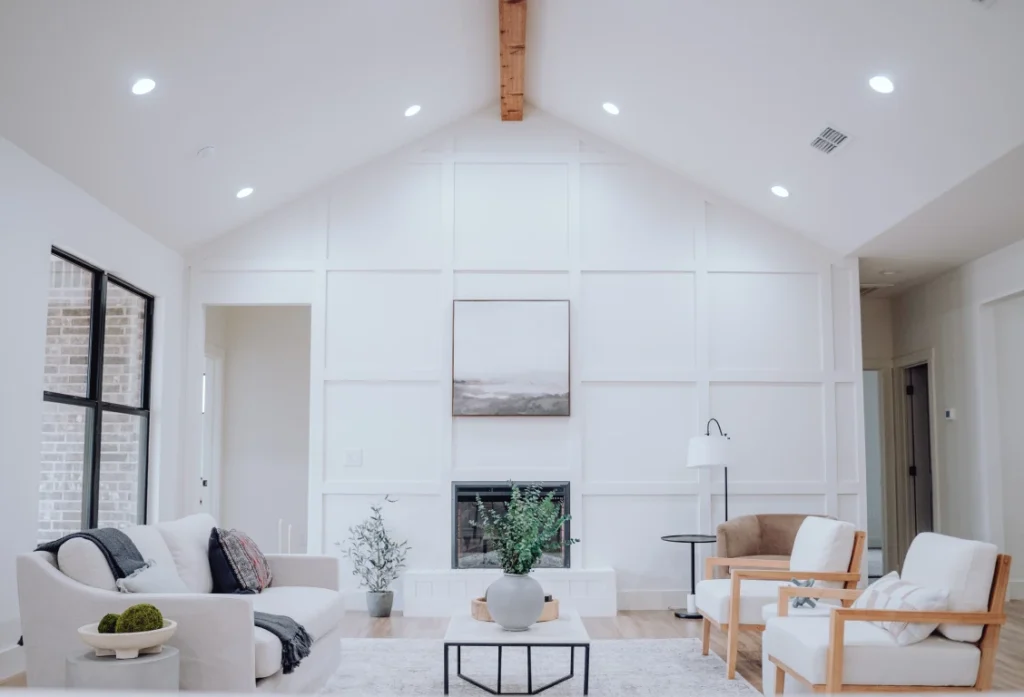
4. Cathedral Vault Ceiling
- High, sloped ceilings that create an open, airy feel.
- Common in churches and large living spaces.
- Benefits: Enhances natural light, creates a spacious atmosphere.
- Best for: Large living rooms, churches, and open-concept homes.
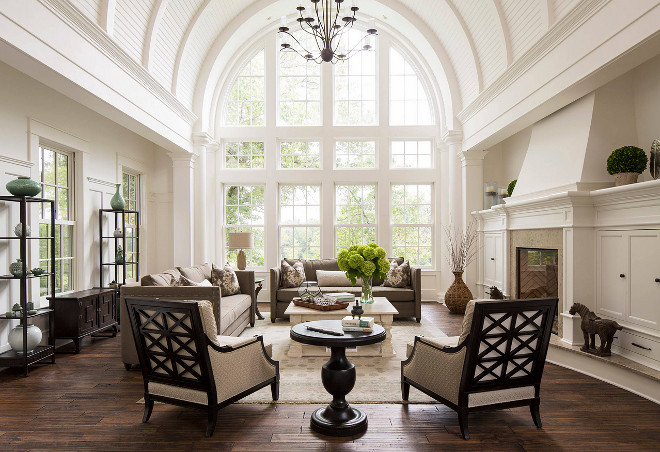
5. Barrel Ceiling
- A curved ceiling design that resembles the inside of a barrel.
- Often used for dramatic architectural effects.
- Benefits: Enhances acoustics, adds elegance.
- Best for: Theaters, luxury homes, concert halls.
Ceiling Height Standards
If you’re trying to understand how high ceilings typically are in modern homes, including common residential standards and design considerations, see our guide on standard ceiling height for homes. It explains typical ceiling heights, building code minimums, and how height impacts comfort and efficiency.
standard ceiling height for homes
→ https://spaceceiling.ca/blog/what-is-the-standard-ceiling-height-for-homes/
Benefits of Different Ceiling Types
Each type of ceiling serves a unique purpose:
- Stretch Ceilings provide a seamless, modern look and are waterproof, dust-free, and customizable.
- Suspended Ceilings hide wiring and ductwork while allowing easy maintenance access and improving fire resistance.
- Coffered Ceilings add an elegant, structured aesthetic while enhancing room acoustics.
- Cathedral Ceilings create an open, airy atmosphere, making spaces feel larger and more inviting.
- Barrel Ceilings offer a unique architectural feature that improves acoustics and adds sophistication to any space.
Why Ceiling Choice Matters
Selecting the right ceiling type improves a space’s functionality, aesthetics, and energy efficiency. Ceilings can:
- Conceal wiring, pipes, or HVAC systems.
- Improve insulation and energy savings.
- Enhance acoustics by reducing echo and noise.
- Add fire resistance for safety.
- Increase property value with elegant finishes.
Frequently Asked Questions (FAQs)
What is the most durable ceiling type?
Stretch ceilings are highly durable due to their waterproof, dust-resistant, and low-maintenance properties. Unlike drywall, they do not crack or require frequent repainting.
Which ceiling type is best for modern homes?
Stretch ceilings are the best choice for modern homes because they offer customizable colors, lighting integration, and a sleek, seamless look.
How do ceilings affect room acoustics?
Ceilings with acoustic properties, such as coffered, barrel, and suspended ceilings, help reduce noise and improve sound clarity, making them ideal for theaters and offices.
Are stretch ceilings expensive?
While initially more expensive than traditional drywall, stretch ceilings offer long-term savings by eliminating the need for frequent repairs and maintenance.
Ceiling Price with install
1. Coffered Ceiling:
- Cost: $10 to $40 per square foot installed.
- Details: A 150-square-foot room would cost approximately $1,500 to $6,000. Prices vary based on materials (e.g., MDF, hardwoods like oak or mahogany) and design complexity.
homeguide.com
2. Tray Ceiling:
- Cost: $3 to $7 per square foot installed.
- Details: For a 15’x15′ room (225 square feet), the cost ranges from $675 to $1,575. Costs depend on factors like design, materials, and labor.
homeguide.com
3. Vaulted Ceiling:
- Cost: $25 to $75 per square foot installed.
- Details: Vaulted ceilings are more complex and require additional structural work, leading to higher costs.
fixr.com
4. Suspended (Drop) Ceiling:
- Cost: $2 to $5 per square foot installed.
- Details: This cost-effective option involves installing a grid system with tiles and is commonly used in basements and commercial spaces.
5. Stretch Ceiling:
- Cost: $6 to $14 per square foot installed.
- Details: Stretch ceilings consist of a PVC or fabric membrane stretched over a frame, offering a sleek and modern appearance. Prices vary based on material quality and design.
6. Fiber Optic Ceiling:
- Cost: $10 to $30 per square foot installed.
- Details: Creating a starry sky effect using fiber optics involves specialized installation, contributing to the higher cost.
Final Thoughts
Ceilings are more than just overhead surfaces—they impact design, functionality, and comfort. Whether you prefer modern stretch ceilings, practical suspended ceilings, or classic coffered designs, choosing the right ceiling enhances your space’s aesthetic appeal, acoustics, and efficiency.
By integrating cutting-edge ceiling solutions, you can create a healthier, more stylish, and practical environment tailored to your needs. 🚀
💡 Looking to upgrade your ceiling? Contact us today to explore luxury ceiling solutions tailored to your space!
Frequently Asked Questions
Quick answers to common questions homeowners ask about ceiling types, durability, acoustics, basements, costs, and property value.