4
The Invisible Boundary

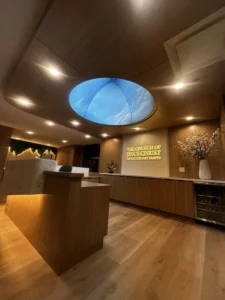
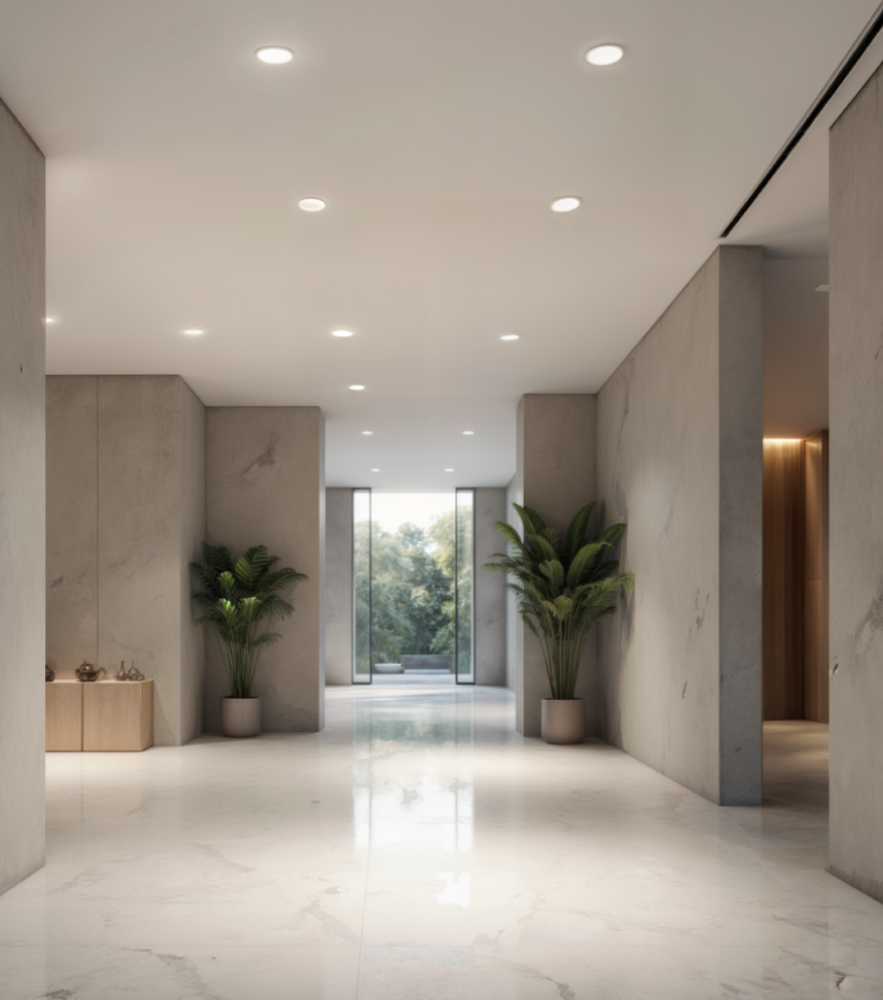
In architectural interiors, lighting is no longer specified as a fixture—it is defined as part of the spatial composition. Trimless potlights represent this transition with clarity. They remove the visible boundary between light and ceiling, allowing illumination to exist without interruption.
For designers and architects, this is not simply a visual upgrade. It is a control decision. The ceiling becomes a continuous surface, and light becomes a precisely placed tool rather than a repeated object. In high-end residential and commercial spaces across Canada, this approach is increasingly becoming the standard.
When Light Defines the Space
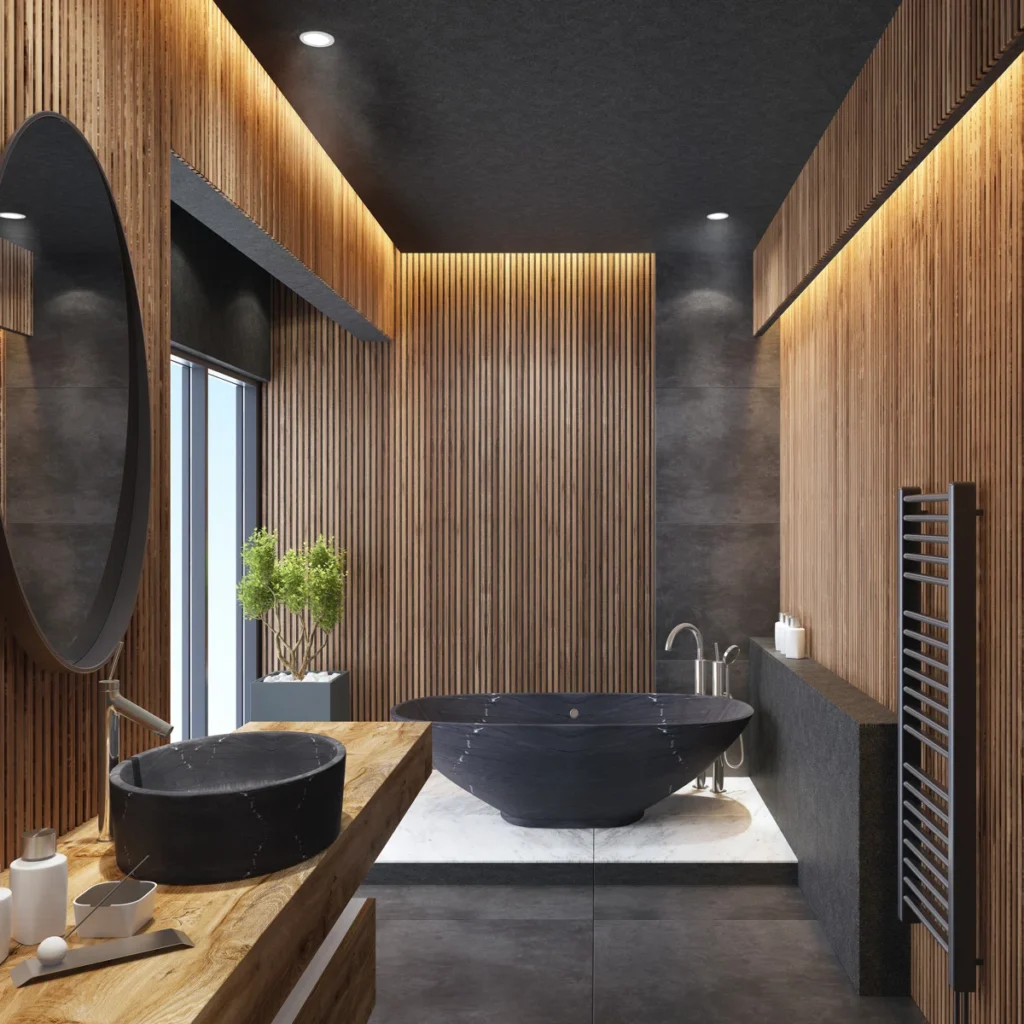
Once the trim disappears, the performance of light becomes fully exposed. Without visible fixtures to anchor the eye, the distribution of light must be intentional. The ceiling no longer carries the design—the light does.
Beam angle becomes the language of the space. Narrow beams introduce contrast and hierarchy, directing attention toward architectural features and materials, while wider beams soften the environment—though without discipline, they quickly flatten the space and reduce depth.
This is where trimless lighting becomes demanding. There is nothing to hide behind. Every decision is revealed through the way light behaves.
Controlled Light: UGR and Visual Comfort
The refinement of trimless lighting is most evident in how it handles glare. In architectural environments, comfort is not subjective—it is measurable. Unified Glare Rating (UGR) becomes a critical factor, particularly in spaces where occupants spend extended periods.
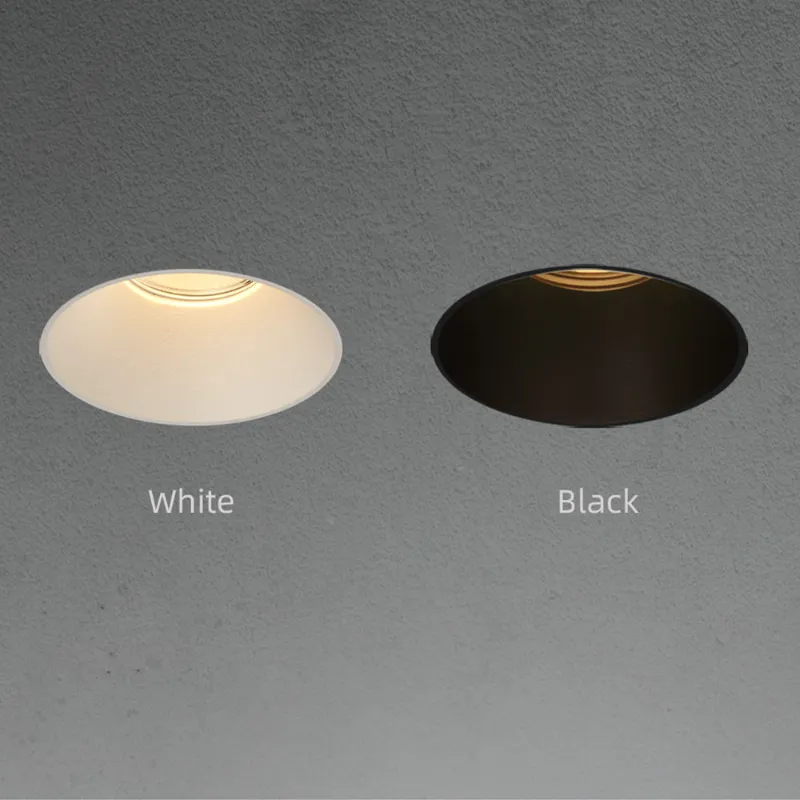
Deep recessed trimless fixtures, especially those with black internal finishes, naturally shield the light source from direct view. Instead of seeing brightness, the eye experiences controlled illumination. The result is a quieter visual field, where the ceiling recedes and the architecture becomes more legible.
When light is resolved correctly, the space feels effortless—even if the complexity behind it is not.
Direct Glare and Visual Disruption
Direct glare remains one of the most common issues in ceiling lighting, yet it is often overlooked at the design stage.
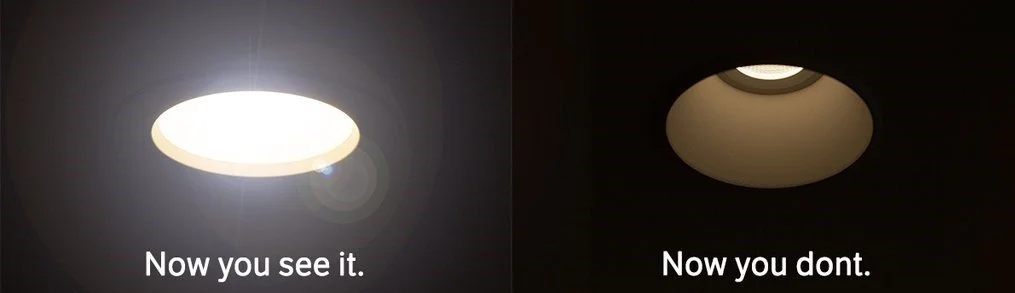
It occurs when the light source is directly visible to the eye, creating visual discomfort and reducing the perceived quality of the space. In many standard recessed fixtures, the LED source sits close to the ceiling plane, making it easily visible from multiple angles. The result is not only discomfort, but distraction—drawing attention away from the architecture and toward the light itself.
In contrast, trimless lighting systems with deep recess and controlled optics are designed to minimize this effect. By positioning the light source higher within the ceiling and often incorporating darker internal finishes, the direct line of sight is reduced. What remains is controlled illumination rather than exposed brightness.
This distinction is critical in refined interiors. When glare is not resolved, even well-designed spaces can feel harsh and unresolved. When it is controlled, the lighting becomes quiet, allowing materials, form, and proportion to take precedence.

True Colour and Material Integrity (CRI)
Light defines how materials are perceived. Without high color accuracy, even the most carefully selected finishes lose their impact.
High-performance trimless systems are specified with CRI 90+ to ensure materials appear as intended. Wood retains its warmth, stone reveals its depth, and textiles maintain their natural tone.
Color temperature further refines the atmosphere. Warmer tones in the range of 2700K–3000K create intimacy and depth, particularly in residential environments. Cooler temperatures, when misused, can flatten surfaces and strip away richness.
For designers, this is not preference. It is calibration.

Integration with Ceiling Systems
4
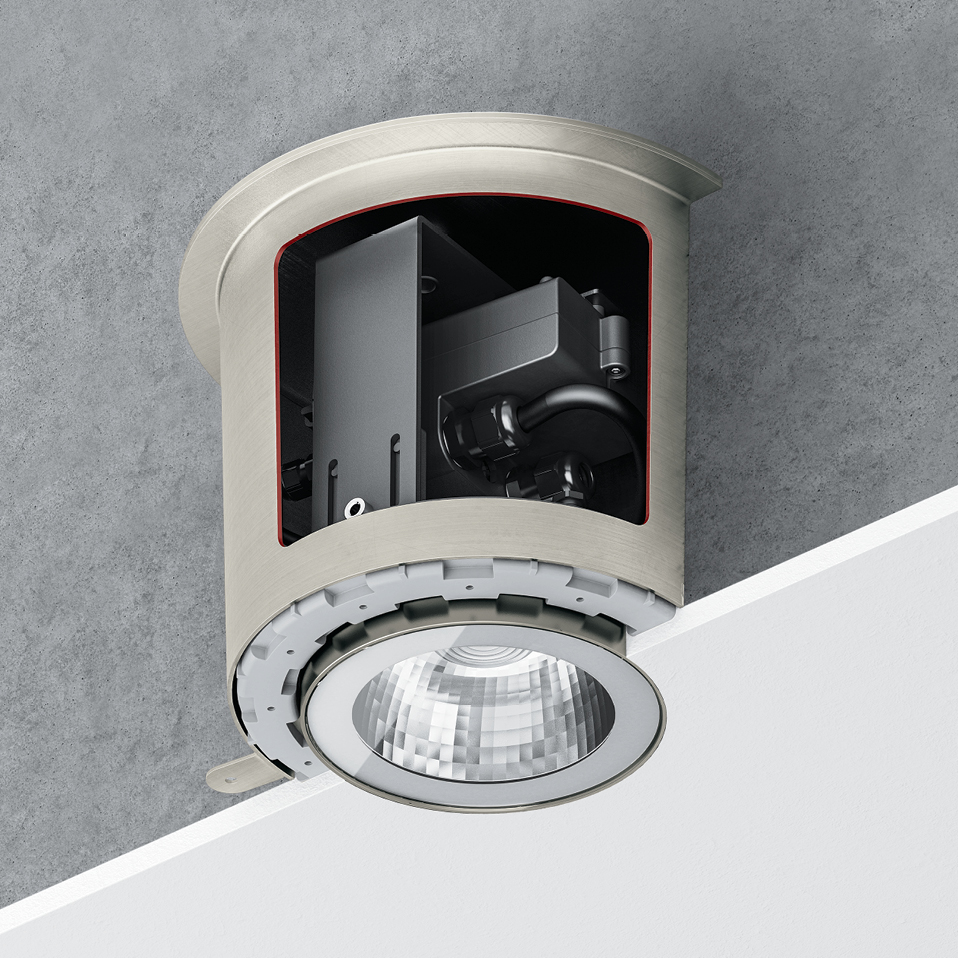
Trimless lighting demands early coordination. It is not added into a finished ceiling—it is built into it.
This is particularly relevant in Canadian projects, where structural conditions define design limitations. In cities like Calgary and Vancouver, concrete ceilings in condominiums and penthouses present a unique challenge. Penetrations are restricted, drops are limited, and traditional recessed solutions are often not viable.
In these conditions, lighting is not simply selected—it must be engineered into the ceiling itself.
Integrated ceiling systems provide that opportunity. By introducing a controlled secondary layer, trimless lighting can be incorporated without compromising the structure, maintaining both performance and architectural clarity.
This approach is already being implemented across projects in Calgary and Vancouver, where clients are looking for solutions that go beyond standard lighting limitations and allow for fully resolved, minimal ceilings.
Where Design Breaks Down
In trimless lighting, problems are not hidden—they are revealed. Spaces lose hierarchy when lighting is overused, creating uniform brightness that removes depth. Improper beam selection introduces either harsh hotspots or a lack of definition, while mismatched color temperatures disconnect materials from their intended tone. Most critically, when lighting is not coordinated early with the ceiling system, precision is lost before installation even begins.
These are not technical failures. They are design decisions.
Beyond Downlights: A Layered Strategy
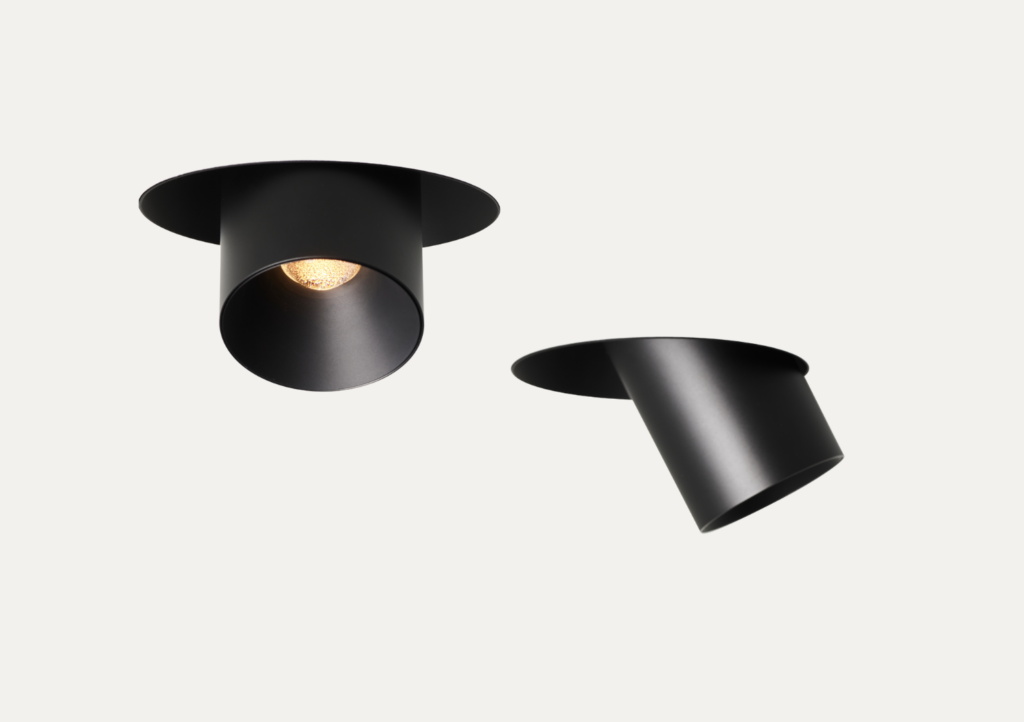
Trimless potlights or spotlights are only one element within a complete lighting composition.
They are most effective when combined with linear systems, recessed profiles, perimeter cove lighting, and wall washing. Each layer contributes differently—ambient light establishes the base, accent lighting defines focal points, and indirect illumination softens transitions.
The objective is not brightness. It is balance.
A well-resolved lighting plan allows the space to unfold gradually, guiding movement and perception without overwhelming the architecture.
The Role of Expertise: Space Ceiling
Precision lighting is not achieved through fixtures alone. It is achieved through understanding how light behaves as part of a complete ceiling system.
At Space Ceiling, lighting is approached as an integrated solution—where alignment, depth, and illumination are resolved together rather than separately.
For projects requiring seamless architectural integration, systems such as
architectural trimless potlights
allow lighting to become part of the ceiling rather than applied to it.
At the same time, trimless downlights are only one layer. More advanced environments often extend into immersive ceiling solutions such as
galaxy ceilings
or adaptable systems like
magnetic lighting for modern spaces
These approaches are already being implemented across Calgary and Vancouver, particularly in condominiums and penthouses where concrete ceilings limit traditional lighting solutions.
The result is not simply a cleaner ceiling—but a fully resolved lighting environment.
Final Thought
In refined interiors, lighting is rarely noticed when it is done correctly—yet it defines everything.
Trimless potlights represent a shift toward intentional design.
Not more fixtures. Not more brightness.
Just the right light, in the right place, fully integrated into the architecture.
And in that precision, the space speaks for itself.