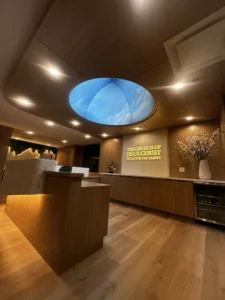
A stretch ceiling is a PVC film or textile membrane pulled taut over a perimeter track to create a smooth, continuous surface below the existing ceiling. It conceals cracks, stains and uneven plaster, and it can integrate lighting, acoustic treatment and printed imagery. This guide covers how the system works, the two membrane types, where it fits, and what to weigh up when specifying it.
Key Takeaways
- Space Ceiling designs and installs stretch ceiling systems for homes and commercial spaces in Calgary and across Canada.
- Two membranes are available, PVC film and textile, in matte, satin and gloss finishes, with printed and backlit options.
- Practical advantages include moisture resistance, acoustic options and easy maintenance, backed by a ten-year warranty.
What Is a Stretch Ceiling?

A stretch ceiling replaces the visible ceiling plane with a membrane stretched across the room. A track is fixed to the walls just below the existing ceiling, the membrane is tensioned into it, and the result is a seamless surface with no joints, taping or painting.
Because the membrane sits below the original ceiling, it hides imperfections and creates a shallow void that can conceal wiring, ductwork and sprinkler lines while keeping them accessible. For architects and designers, that means a clean ceiling plane without the coordination effort of a conventional drywall finish.
The system suits living rooms, bedrooms, kitchens and bathrooms as well as offices, retail and hospitality spaces. Finishes range from flat matte to high gloss, and the membrane can carry integrated lighting or a printed image, from a subtle texture to a full galaxy ceiling.
Two Membranes: PVC Film and Textile
Stretch ceilings use one of two membranes. They install the same way but perform differently, so it is worth specifying the right one for the room.
PVC film is a vinyl membrane and the most widely used option. It is waterproof and washable, it can be printed with any image, and it comes in matte, satin and high-gloss finishes. Gloss film reflects light and can make a low room feel taller. PVC is the right choice where moisture resistance and cleanability matter: bathrooms, kitchens, pools and commercial spaces.
Textile is a woven polyester fabric with a soft, matte appearance. It offers better acoustic performance than film, it takes printed imagery well, and it suits rooms where a calm, non-reflective surface is wanted: bedrooms, home theatres, offices and restaurants.
Both membranes are available in our stretch ceiling range, and both can be combined with integrated lighting and acoustic treatment.
How Installation Works
Installation is quick and produces little mess. The perimeter track is measured and fixed to the walls, lighting and services are positioned in the void above, and the membrane is stretched and clipped into the track. Most rooms are finished in hours or within a single day, and the room can be used straight after. There is no sanding, taping or painting, and furniture can usually stay in place. You can read more about our installation process.
Our Story
Space Ceiling was founded by Aivaras Mulskis, who came to Calgary from Lithuania and saw that the European stretch ceiling systems he knew were missing from the local market. He set out to offer them here, first to homeowners dealing with dated popcorn and textured ceilings, then to designers, architects, contractors and builders across the city.
Today the company designs and installs stretch ceilings and integrated lighting for new builds and renovations, working as a trade partner to the design and construction industry. Installations are carried out by our own crews and scheduled around other trades, with an emphasis on tidy work and minimal disruption.
Working With Space Ceiling

We act as a technical partner on ceiling design. That means helping with material selection, lighting integration, acoustic targets and detailing around sprinklers, HVAC grilles and speakers before anything is ordered, and coordinating with the architect, designer and contractor through the install.
Materials are sourced from established European manufacturers, and every project is covered by a ten-year warranty on the membrane, welded seams and harpoon profiles.
Customization Options
Colour, finish and form can all be specified. The palette covers whites and neutrals through saturated colours; finishes run from matte to satin to high gloss; and the membrane can be printed with patterns, imagery or branding. Multi-level forms, curved transitions, light coves and backlit panels allow the ceiling to shape the room rather than just cover it.
For commercial work, printed ceilings can carry brand graphics or wayfinding, while backlit membranes double as large, glare-free light sources. For homes, the same techniques produce calmer results: a matte bedroom ceiling with a perimeter light line, or a printed sky in a child’s room.
Benefits of Stretch Ceilings

PVC film is water-resistant and washable, which makes it practical for kitchens, bathrooms and pool surrounds. Any stains, cracks or seams in the original ceiling disappear behind the new surface, and the air gap between the two adds a modest insulating layer.
Stretch ceilings also contribute to acoustic performance. Textile and perforated acoustic membranes absorb sound and reduce echo, which matters in home theatres, restaurants, classrooms and open offices. Our article on acoustic stretch ceilings goes into more detail.
Lighting Integration

Lighting can be built directly into the ceiling: recessed spots, linear LED channels, perimeter light lines, backlit panels and pendant drops. Because the membrane is installed after the electrical work, fixtures land exactly where the lighting plan calls for them, and drivers and wiring stay hidden in the void above.
Backlit membranes deserve a note for designers: a translucent membrane over an LED field becomes a large, even, glare-free light source, which suits receptions, corridors and retail. Dimmable LED lighting throughout lets one ceiling serve both task and ambient roles.
Materials and Indoor Air Quality
Our membranes are rated A+ for indoor air emissions, they are hypoallergenic, and the antistatic surface resists dust buildup. PVC film is recyclable and its water resistance discourages mould growth, which suits humid rooms. Maintenance is simple: a soft cloth with a mild cleaning solution keeps the surface looking as installed.
Where Stretch Ceilings Fit

In homes, multi-level stretch ceilings give living rooms, bedrooms and bathrooms a finished look while hiding the imperfections of the original ceiling. They are a practical answer to dated popcorn or textured ceilings, including ceilings where asbestos is a concern, since the old surface is left undisturbed.
In commercial work, the appeal is speed and finish quality: shops, restaurants and offices get a seamless, brandable ceiling without a long shutdown. The membrane conceals joints, stains and services, and printed or backlit options can carry the interior design concept across the ceiling plane.
Design Directions We Install
A few directions come up repeatedly in our current projects. Matte and satin finishes with subtle texture suit calm residential interiors. Backlit membranes and linear LED integration suit commercial spaces that need both light and a clean ceiling plane. Printed ceilings, from restrained patterns to full galaxy and star designs, remain the most requested feature in home theatres and children’s rooms. Acoustic textile membranes are increasingly specified for restaurants and open offices, and multi-level forms are used where the ceiling needs to define zones in an open plan.
Warranty
Every stretch ceiling we install is covered by a ten-year warranty on the membrane, welded seams and harpoon profiles. The warranty reflects how the system is built: tensioned membranes do not crack, the profiles hold their grip, and the surface needs only basic cleaning to keep its appearance.
Summary
A stretch ceiling gives you a seamless, customizable ceiling plane with practical benefits: moisture resistance, acoustic options, integrated lighting and fast, clean installation. With PVC film and textile membranes to choose from, the system adapts to homes and commercial spaces alike. If you are weighing it against drywall or a conventional suspended ceiling, the deciding factors are usually speed of install, finish quality and what you want the ceiling to do beyond covering the structure.
Frequently Asked Questions
What is a stretch ceiling?
A perimeter track is fixed to the walls and a PVC or textile membrane is stretched into it, forming a smooth, seamless ceiling below the existing one.
How long does installation take?
Most rooms are finished in hours or within a single day, with little dust or disruption, and the room can be used straight after.
Can lighting be built into a stretch ceiling?
Yes. Recessed spots, linear LED channels, perimeter light lines, backlit panels and pendants can all be integrated. See our LED lighting options for what is possible.
Are stretch ceilings suitable for bathrooms and kitchens?
Yes. PVC film is waterproof and washable, so it handles humidity and wipes clean with a mild cleaning solution.
Do stretch ceilings help with acoustics?
Textile and perforated acoustic membranes absorb sound and reduce echo, which helps in home theatres, restaurants, classrooms and open offices.
How do you clean a stretch ceiling?
A soft cloth with a mild cleaning solution is enough. The antistatic surface resists dust, so they need little upkeep.